
About All Tours3-Day ToursPrivate ToursFrom La Paz ToursFrom San Pedro ToursSunset ToursStargazing Night Tours Directions Hours & Fees
Find Tours 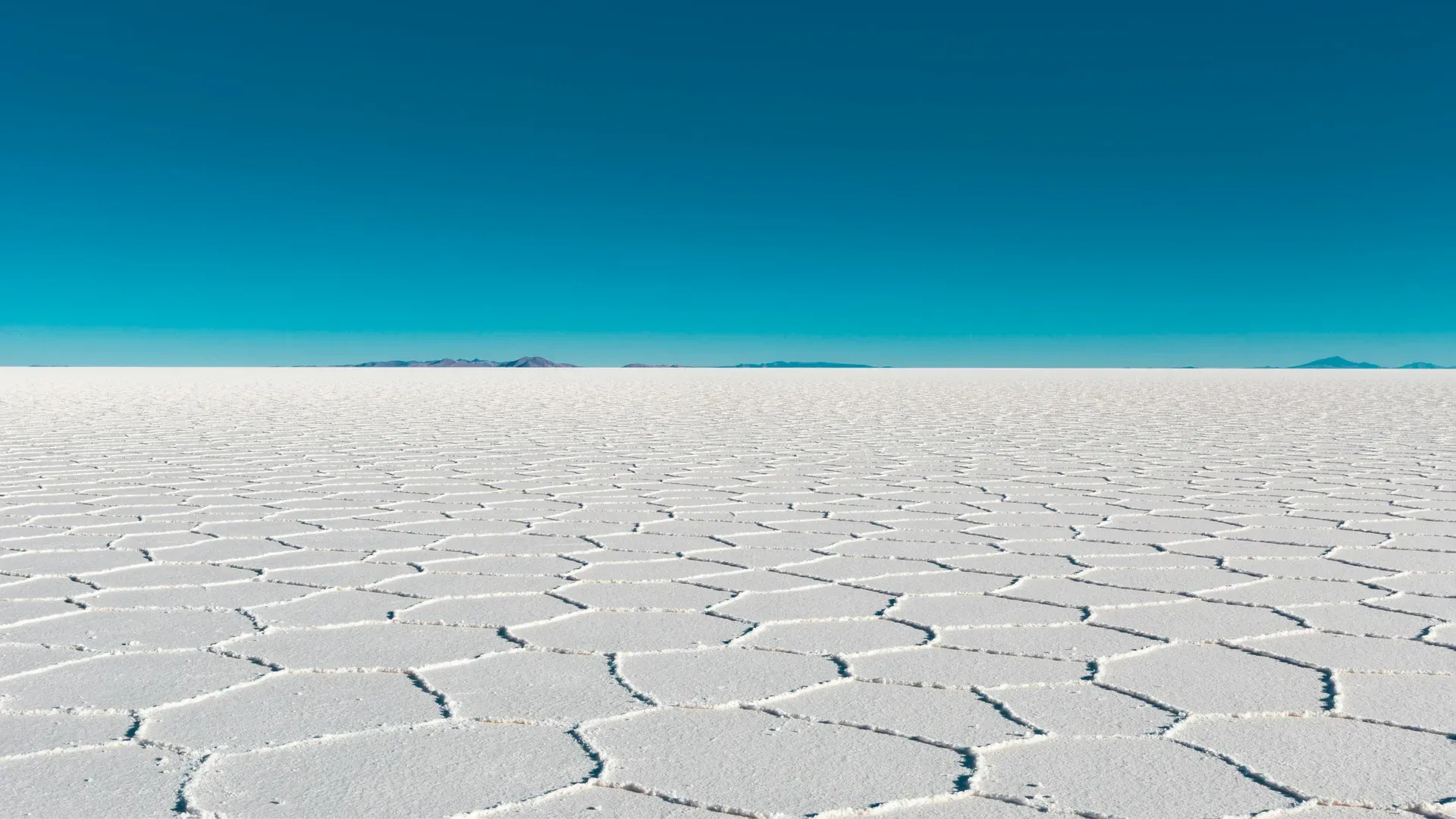
Visitors typically reach southwestern Bolivia by taking a 10-hour overnight bus or a 60-minute flight from La Paz to the town of Uyuni. From the town center, guided 4x4 jeeps drive directly onto the 10,582-square-kilometer salt flat.
Salar de Uyuni, Daniel Campos Province, Potosí, Bolivia
Overnight buses leave the La Paz bus terminal between 8:00 PM and 9:00 PM, depositing passengers in Uyuni between 6:00 AM and 8:00 AM. Todo Turismo, Trans Omar, and Panasur operate these 550-kilometer routes across the Altiplano. Passengers sleep through the freezing high-altitude night while the vehicle navigates the dark highway. A fully-reclining 'cama' seat provides a flat sleeping surface, unlike the angled 'semi-cama' alternative. Arriving before 8:00 AM aligns perfectly with standard 4x4 tours that depart town at 10:00 AM.
Boliviana de Aviación (BoA) flies the 550 kilometers from La Paz to Uyuni in under 90 minutes. The government-owned airline operates this route approximately once every three days. Passengers land at the small Uyuni airport, located just a 10-minute drive from the town center. Taxis wait directly outside the terminal doors to transport travelers to their hotels or tour agencies. Drivers charge a maximum flat rate of 35 BOB ($5 USD) for the entire vehicle, never per person.
Travelers take a four-hour bus ride from La Paz down to the city of Oruro before boarding the railway. The train segment from Oruro to Uyuni takes an additional six to seven hours. This rail line runs four times weekly across the flat, dusty plateau. Trains continue past Uyuni, connecting further south to Tupiza and Villazon near the border. The combined bus and train journey spans 550 kilometers and requires managing your own luggage during the transfer in Oruro.
Dedicated parking does not exist on the salt flats, and independent driving risks sinking vehicles into deep saltwater. Travelers instead start in the Uyuni town center, where airport taxis drop off passengers for $5 USD (35 BOB). Specialized operators here load passengers into 4x4 jeeps, offering modified vehicles with wheelchair lifts for accessible entry.
| From | Mode | Time | Cost | Tip |
|---|---|---|---|---|
| La Paz | Overnight Bus | 10 to 12 hours | $15 to $25 USD | Select a fully-reclining 'cama' seat on Todo Turismo, Trans Omar, or Panasur to sleep through the overnight drive. |
| La Paz | Flight | 1 to 1.5 hours | $89 to $150 USD | Boliviana de Aviación operates this route only once every three days. |
| La Paz via Oruro | Bus and Train | 10 to 11 hours | $5 to $17 USD | Take a four-hour bus to Oruro before transferring to the train, which departs four times weekly. |
| Uyuni Airport | Taxi | 10 minutes | $5 USD (35 BOB) | Drivers charge a maximum of 35 BOB for the entire vehicle to reach the town center. |
Overnight buses from La Paz take 10 to 12 hours. Book a fully-reclining 'cama' seat rather than a 'semi-cama' to sleep through the bumpy ride. Reliable operators like Todo Turismo and Panasur depart the terminal between 8:00 PM and 9:00 PM, arriving in Uyuni by 6:00 AM.
Boliviana de Aviación (BoA) cuts the La Paz transit time to just 60 minutes. Schedule your trip around their limited timetable, as flights operate only once every three days. Hail a taxi outside the Uyuni airport terminal—the 10-minute ride to the town center costs a maximum of 35 BOB for the entire vehicle.
Carry all necessary funds in physical Bolivian Bolivianos. Remote desert routes lack ATMs entirely, and gatekeepers reject US dollars. You need 150 BOB for the Eduardo Avaroa National Reserve, 30 BOB for Incahuasi Island, and frequent 6 BOB coins for public outdoor toilets.
Split the journey by taking a four-hour bus from La Paz to Oruro, followed by a six-to-seven-hour train ride to Uyuni. This rail route operates four times weekly and costs between 32 and 120 BOB. Use this connection if you plan to continue south toward Tupiza or the Villazon border.
US passport holders face a strict $160 USD tourist visa fee on arrival at the border. Pack two physical ID-sized photos in your carry-on before leaving home. Without these exact items ready, border agents will deny your entry into Bolivia.
Overnight buses depart La Paz between 8:00 PM and 9:00 PM, arriving in Uyuni 10 to 12 hours later. Tickets cost $15 to $25 USD on operators like Todo Turismo, Trans Omar, and Panasur. Book a fully-reclining 'cama' seat to sleep through the 550-kilometer journey.
Boliviana de Aviación operates flights from La Paz to Uyuni airport roughly once every three days. The 550-kilometer route takes 60 to 90 minutes and costs $89 to $150 USD. Taxis wait outside the terminal to drive the final 10 minutes into the town center for a maximum of 35 BOB.
Trains run to Uyuni four times a week, requiring a four-hour bus ride from La Paz to Oruro first. From Oruro, the rail journey takes another six to seven hours and costs between 32 and 120 BOB. This line also connects further south to Tupiza and Villazon.
Independent driving risks severe vehicle damage from deep saltwater and total disorientation across 10,582 square kilometers of featureless crust. The expanse completely lacks roads, signs, and landmarks. Book a guided 4x4 tour to navigate the terrain safely.
Taxis from the Uyuni airport to the town center cost a maximum of $5 USD, or 35 BOB, for the entire vehicle. The drive takes exactly 10 minutes. Flights land roughly once every three days, so cabs align with this sparse arrival schedule.
US citizens must pay $160 USD and present two ID-sized photos to obtain a Bolivian tourist visa on arrival at the border. Many Western European and South American citizens enter visa-free for up to 90 days. Keep your cash organized, as border outposts and remote routes lack ATMs.
The remote multi-day routes have zero ATMs. You must carry enough Bolivian Bolivianos from town to cover cash-only entrance fees, such as 150 BOB for the Eduardo Avaroa National Reserve and 30 BOB for Incahuasi Island. Bring small coins for the 6 BOB public bathroom charges.
Browse verified tours with free cancellation and instant confirmation.
Find Tours