About All Tours3-Day ToursPrivate ToursFrom La Paz ToursFrom San Pedro ToursSunset ToursStargazing Night Tours Directions Hours & Fees
Find Tours 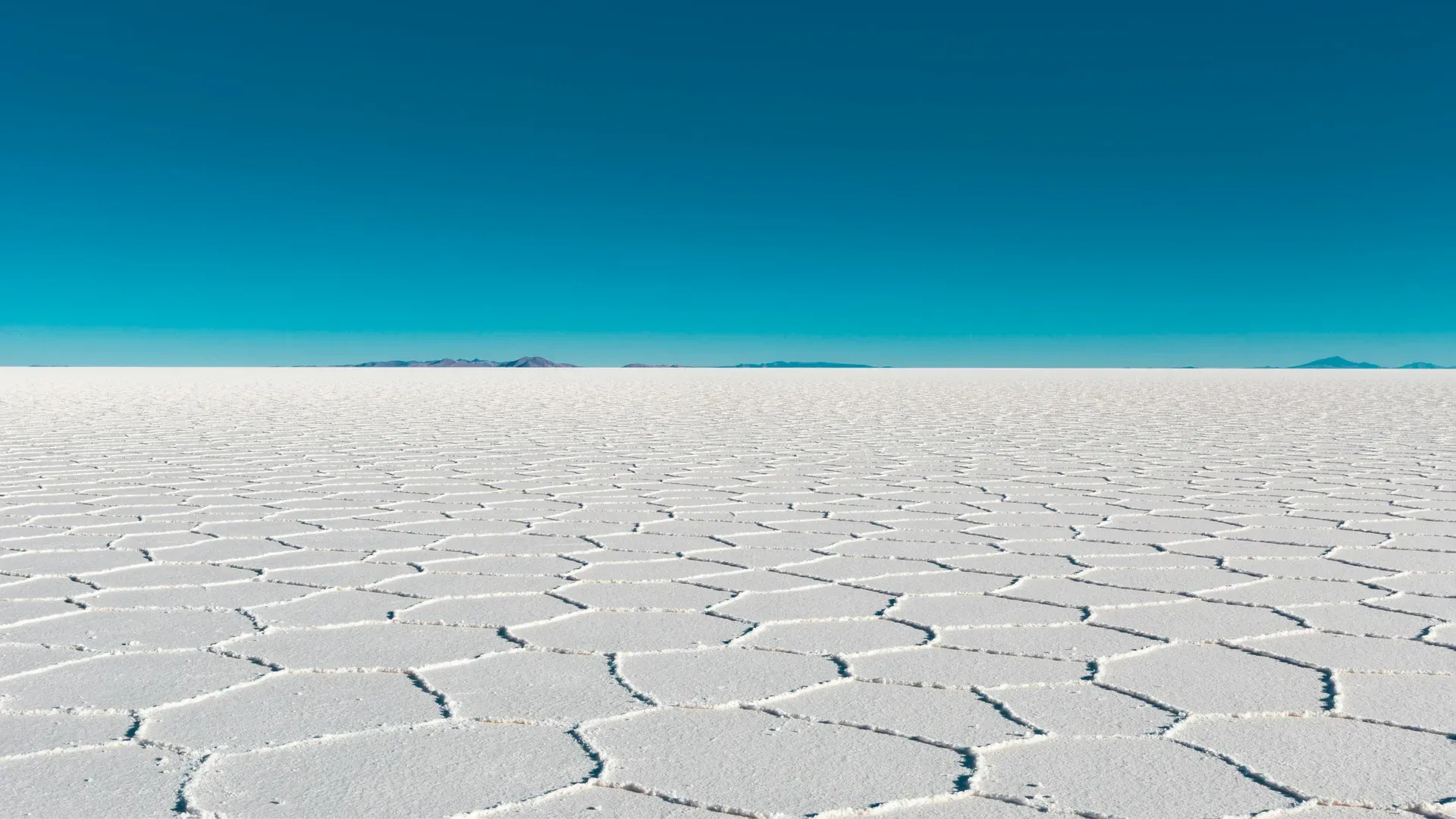
Explore the world's largest salt flat with tours ranging from half-day sunset trips to multi-day high-altitude expeditions. Travel across the vast white crust in rugged 4x4 vehicles to experience the famous mirror effect, colored lagoons, and starry skies.
 Free Cancellation
 A 3-day expedition across the Uyuni salt flats, high-altitude deserts, and volcanic landscapes of southwest Potosí.
 Free Cancellation
 A 7-hour journey across the Uyuni Salt Flats featuring the train cemetery, giant cacti, and perspective photography.
 Free Cancellation
 Explore the Uyuni Salt Flats in a 4x4 Land Cruiser with a team backed by 38 years of local expertise.
 Free Cancellation
 A two-day Uyuni tour featuring a trek on Tunupa volcano, sunset views, and mirror reflections with veteran guides.
 Free Cancellation
 Experience the Salar de Uyuni and Isla Incahuasi on a round-trip overnight journey from La Paz.
 Free Cancellation
 Walk across the world's largest salt desert and watch the sunset over the Uyuni salt flats in Bolivia.
 Free Cancellation
 Experience the Uyuni Salt Flats at sunset and dusk as the sky and stars reflect in the shallow water.

A multi-day expedition through Bolivia’s high-altitude lagoons, geysers, and the vast Uyuni Salt Flats.
 Free Cancellation
 Traverse the world's largest salt flats to capture surreal perspective photos across the endless white horizon.
 Free Cancellation
 A three-day expedition across the Uyuni Salt Flats, volcanic deserts, and colorful lagoons of the Bolivian highlands.
Read what travelers share about their experience visiting Salar de Uyuni — from practical tips to personal highlights.

Visiting the Salar de Uyuni is like stepping onto another planet. As the world's largest salt flat, this massive high-altitude desert offers an endless expanse of shimmering white salt, surreal rock formations, and unique geological wonders.
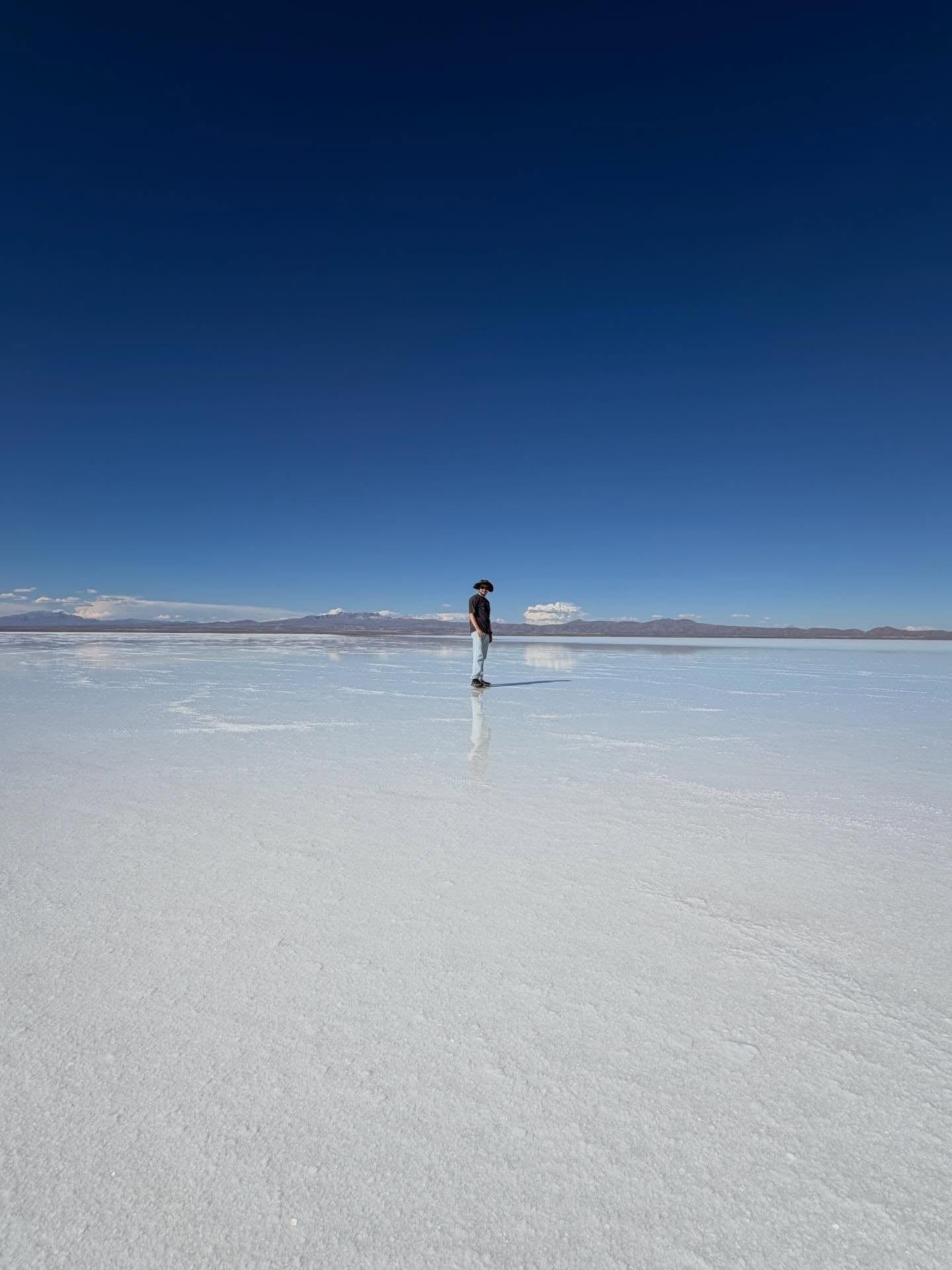
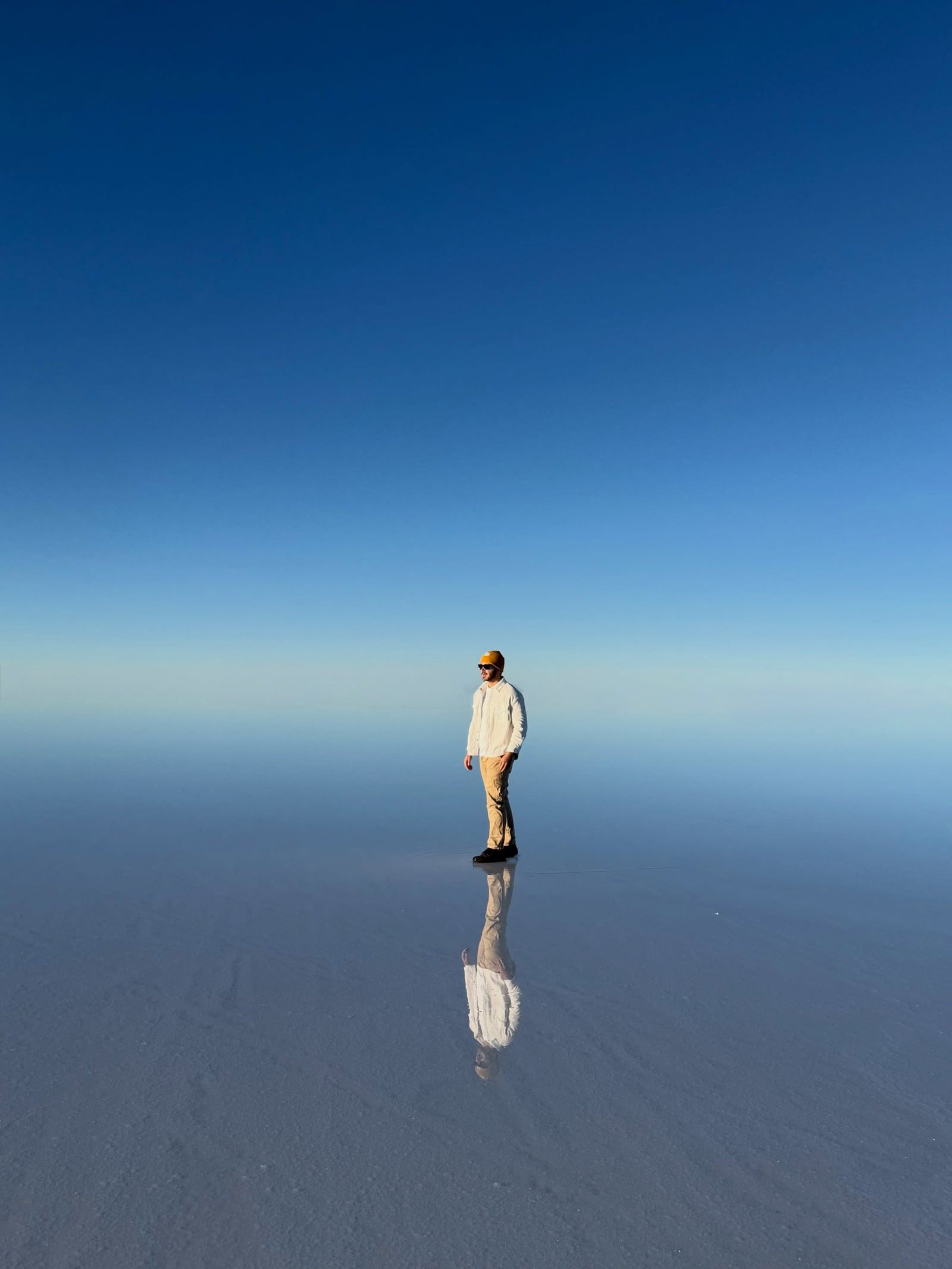
During the wet season from December to March, a thin layer of water covers the salt crust. This transforms the ground into a giant mirror that perfectly reflects the sky, clouds, and stars.
Rising from the middle of the flat white desert, this rocky, volcanic island is covered in giant, centuries-old cacti. A short hike to the top provides a massive 360-degree panoramic view.
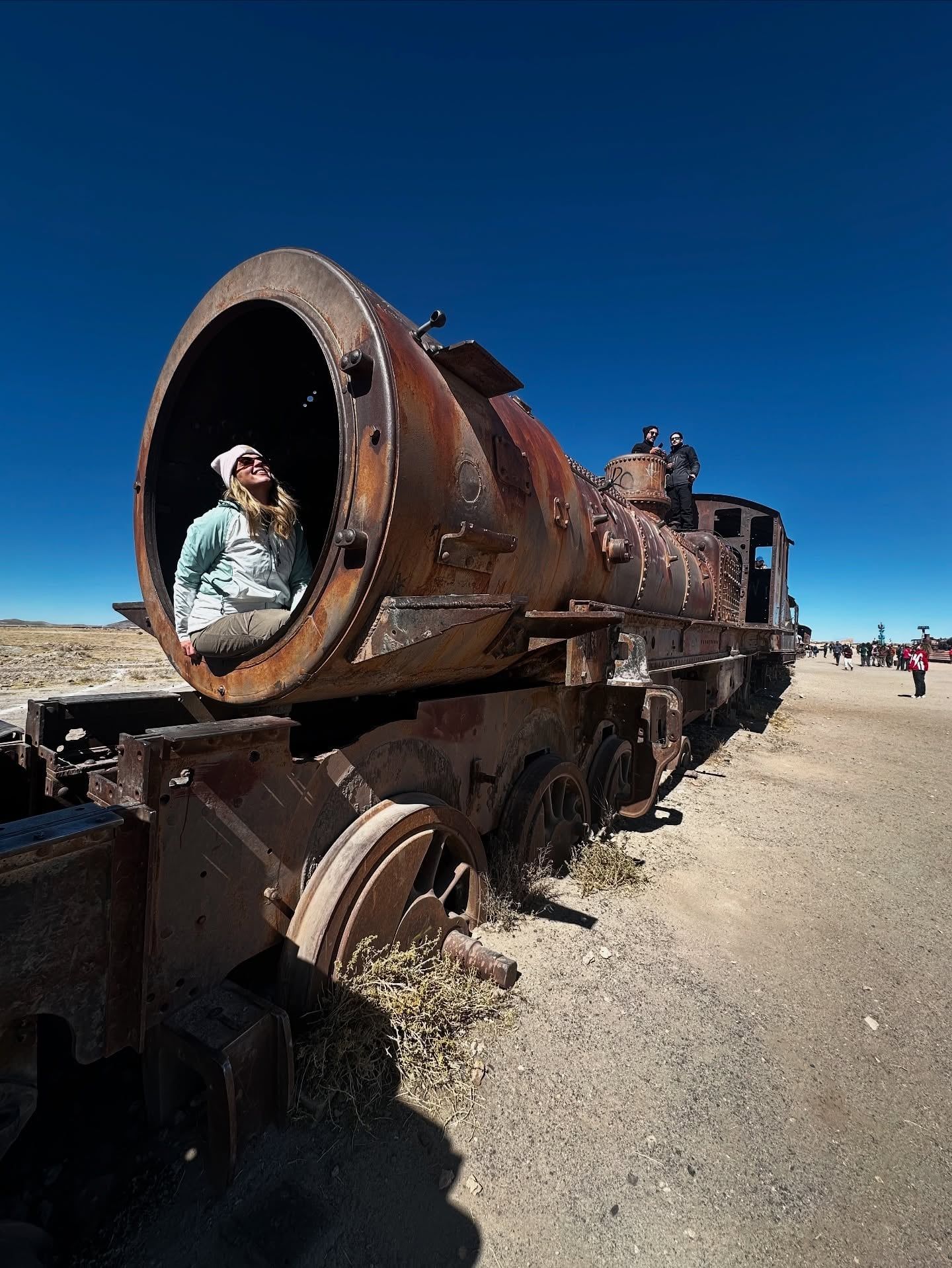
Located just outside Uyuni town, this eerie playground features rusted, hollowed-out 19th-century steam locomotives. Once used to haul minerals to the Pacific, they now make for incredible, gritty photos.
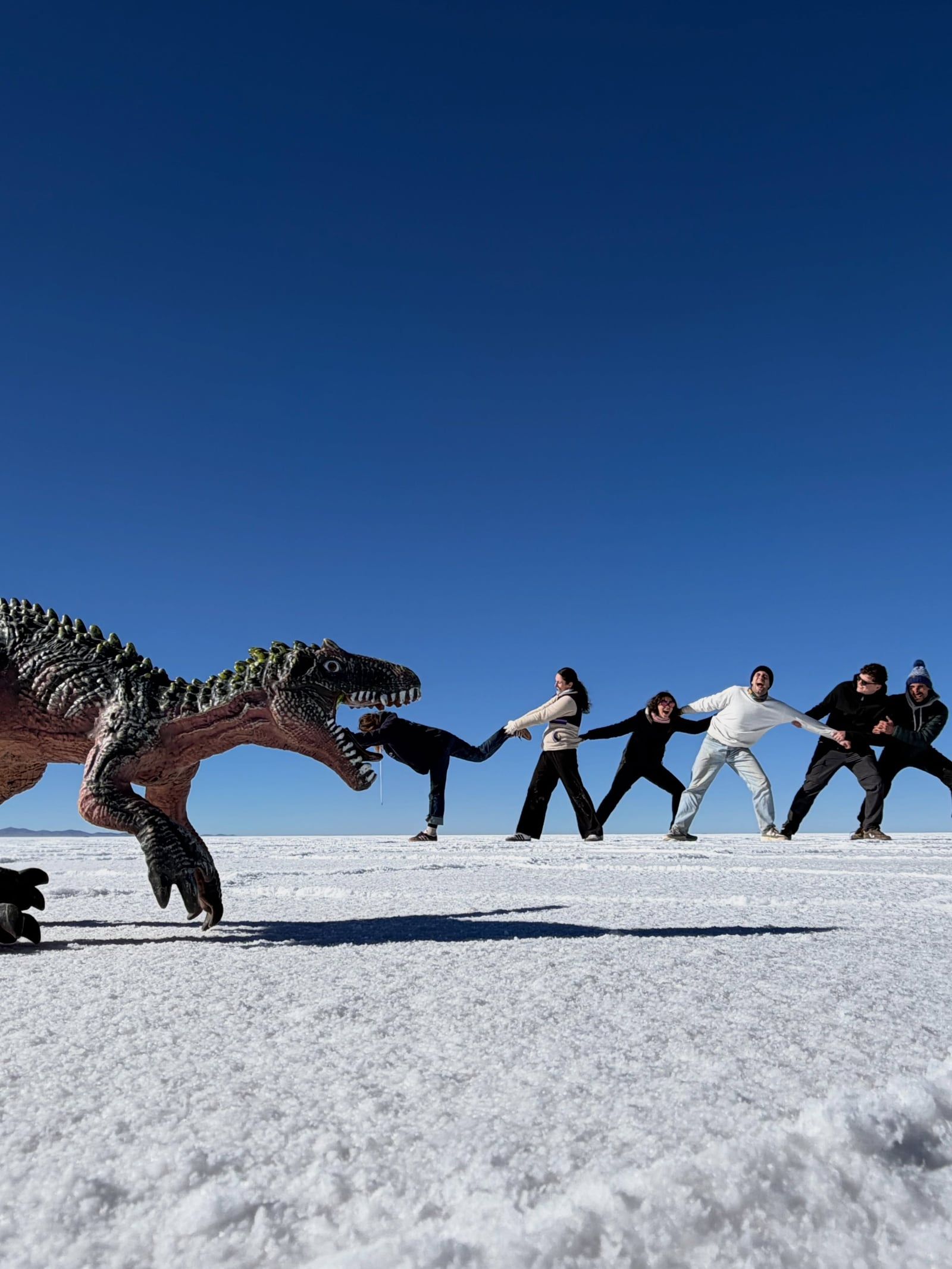
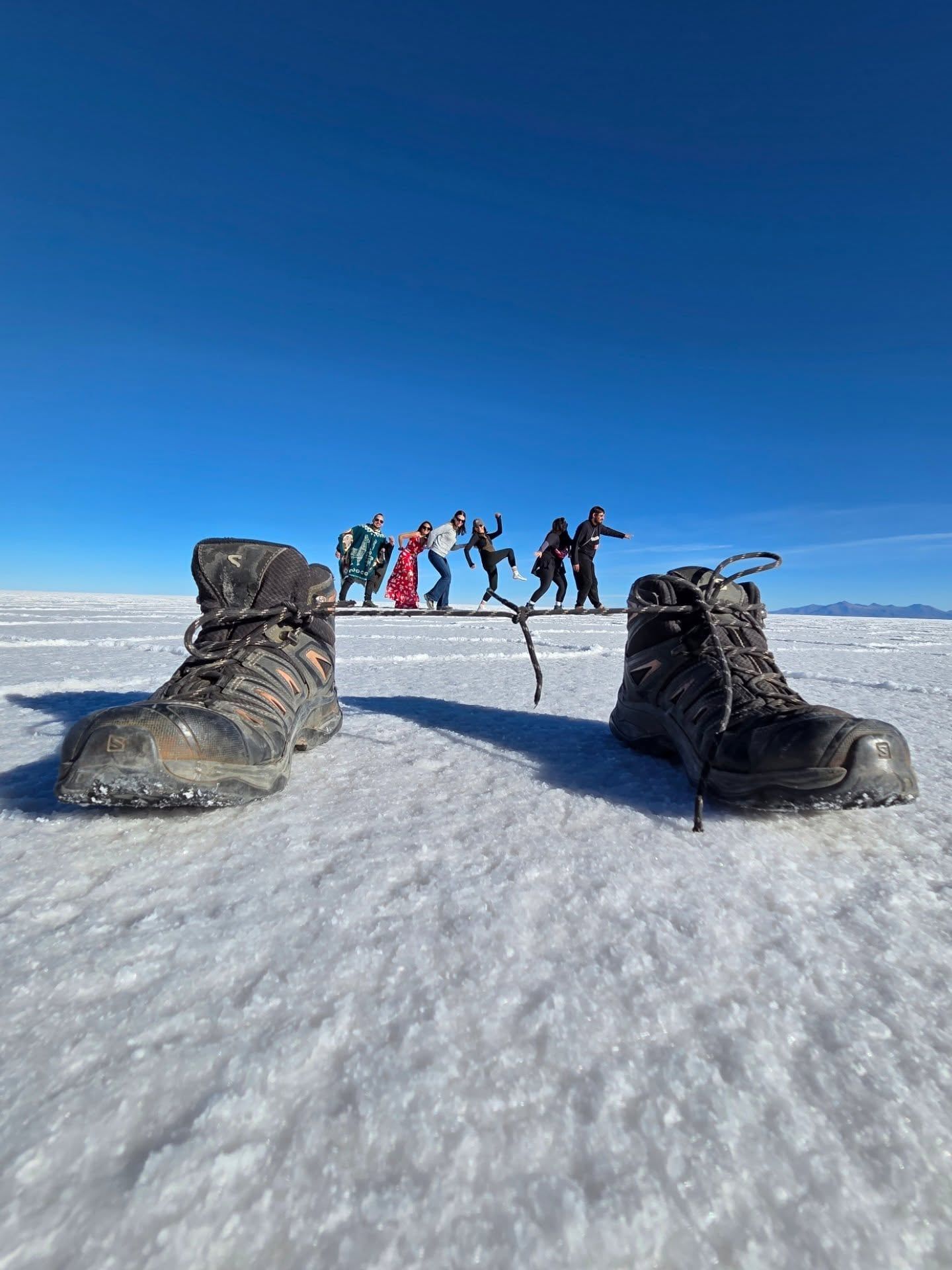
Because the flat white horizon removes all depth cues, you can create hilarious scale illusions. Guides will help you use props like toy dinosaurs or boots to take classic forced-perspective shots.
On multi-day tours, you will venture south into the desert to see vibrant bodies of water like Laguna Colorada. This striking red lagoon is famous for hosting thousands of grazing pink flamingos.
At an extreme altitude of 5,000 meters, the Sol de Mañana geysers feature bubbling mud and steaming vents. Afterward, you can warm up by soaking in the natural Termas de Polques hot springs.
A trip to the Bolivian salt flats requires some advance planning due to the remote location, extreme altitude, and harsh weather conditions. Here is what you need to know before securing your tour.
You can choose a quick 1-day trip in a 4x4 jeep if you are short on time, or a comprehensive 3 to 4-day expedition. Multi-day tours go deep into the Eduardo Avaroa National Reserve to see geysers, deserts, and colored lagoons.
Tour prices rarely include local entrance fees, and US dollars or credit cards are not accepted. You must bring Bolivian Bolivianos (BOB) to pay for Incahuasi Island (30 BOB), the Eduardo Avaroa Reserve (150 BOB), and public bathrooms (6 BOB).
The salt flats sit at 3,650 meters, and multi-day tours reach up to 5,000 meters. Altitude sickness is common, so it is highly recommended to acclimatize in a city like La Paz for a few days before your tour and carry altitude medication.
Temperatures swing wildly in the Altiplano. You need a thermal base layer, a winter jacket, gloves, and a warm hat for freezing mornings. By midday, the intense sun requires a wide-brimmed hat, SPF 50+ sunscreen, and UV-protective sunglasses.
The corrosive salt, dust, and humidity can ruin electronics. Bring ziplock or dry bags for your camera. Also, pack a high-capacity power bank and keep your batteries close to your body, as the freezing cold drains them incredibly fast.
Depending on your nationality, you might need a visa to enter Bolivia. US citizens must obtain a tourist visa on arrival, which costs $160 USD and requires bringing two ID-sized photos to the border.
Vegetarian meals are easy to arrange if you notify the operator in writing beforehand. For wheelchair users, specialized operators in Uyuni offer modified vehicles with lifts, as standard 4x4 group tours require manual transfers.
Most standard group tours offer flexible booking. You can typically get a full refund if you cancel at least 24 hours before the scheduled departure time, though multi-day cross-border tours to Chile may require 3 days' notice.
| 1-Day Salt Flat Tour | 3-Day Comprehensive Expedition | Stargazing & Sunset Tour | La Paz to Uyuni Bus + Tour | |
|---|---|---|---|---|
| Duration | 7 to 9 hours | 72 hours | 5 hours | 24 hours |
| Best for | Travelers short on time or budget | Seeing lagoons, flamingos, and geysers | Photography and the mirror effect | Convenience directly from the capital |
| Includes | 4x4 transport, English/Spanish guide, lunch | Transport, basic lodging, all meals | Transport, sunset views, rain boots (seasonal) | Overnight bus tickets, 4x4 tour, breakfast & lunch |
| Price from | $65 - $130 USD | $150 - $376 USD | $45 - $80 USD | $389 USD |
The Salar de Uyuni is a massive, open natural space, so it doesn't have strict opening or closing gates. However, your access is dictated by tour operator schedules.
Uyuni is a remote town, but it is well-connected to La Paz (550 km away) through several transport options.
There is no bad time to visit, but the seasons offer completely different visual experiences.
Exploring the rugged Altiplano presents physical challenges, but accommodations can be made.
Facilities outside of Uyuni town are incredibly basic, and travelers should adjust their expectations accordingly.
While the vast desert feels lawless, there are important guidelines to protect the environment and respect local workers.
The salt flats sit at about 3,650 meters (11,995 feet), and multi-day tours reach up to 5,000 meters at the geysers. Altitude sickness is very common, causing headaches and nausea. You should acclimatize in a city like La Paz for a few days before your tour and carry altitude medication.
No, tour operators generally do not include local entrance fees. You must bring cash in Bolivian Bolivianos to pay for sites like Incahuasi Island (30 BOB), the Eduardo Avaroa National Reserve (150 BOB), and the Polques hot springs (6 BOB).
Visa requirements depend entirely on your nationality. While many European and South American citizens enter visa-free, US citizens must pay $160 USD for a tourist visa on arrival, which requires bringing two ID-sized photos to the border.
The wet season (December to March) creates a giant mirror effect with a thin layer of water reflecting the sky, though it can restrict vehicle access to some islands. The dry season (May to November) offers clear blue skies and access to the unique hexagonal salt crust patterns.
Facilities are very limited. During the driving portions of the tour, you will mostly use 'natural toilets' outdoors in the desert. When public bathrooms are available at specific tourist stops, they typically cost 6 BOB to use.
While technically possible, it is strongly discouraged. The salt flat covers 10,582 square kilometers with absolutely no roads or landmarks, making it incredibly easy to get lost or damage your vehicle in deep salt water. A guided 4x4 tour is much safer.
You should pack protective ziplock or dry bags to shield your cameras from corrosive salt, dust, and humidity. It is also crucial to bring extra batteries, as the freezing Altiplano temperatures will drain your electronics incredibly fast.
During the winter months of June and July, nighttime temperatures can drop well below freezing. Budget tour accommodations often lack heating and insulation, so you must pack high-quality thermal layers, a winter jacket, and gloves.
Yes, vegetarian meals are surprisingly easy to arrange with most tour operators. However, you must inform the company of your dietary restrictions before booking and get the confirmation in writing so the proper food is packed in your 4x4.
The most common and budget-friendly way is taking an overnight bus, which takes 10 to 12 hours and costs $15 to $25 USD. Alternatively, you can take a 1.5-hour flight via Boliviana de Aviación, or a bus-to-train connection through Oruro.
Browse verified tours with free cancellation and instant confirmation.
Find Tours


This three-day, two-night expedition crosses the world's largest salt flat, a vast expanse stretching 200 kilometers across the Bolivian highlands. The journey takes you to Incahuasi Island to see giant cacti and offers views of the mirror effect during the rainy season. Along the way, you will see the scale of the region's salt and lithium reserves while watching the sunset over the western volcanic range. The route continues into the high-altitude deserts of Siloli and Salvador Dalí, where the landscape shifts to dramatic rock formations and colorful lagoons. You will have opportunities to trek between 3,600 and 5,000 meters near volcanoes such as Tunupa, Ollague, and Licancabur. To relax, the itinerary includes stops at the Polques and Blanca hot springs, as well as chances to observe the local flora and fauna of southwest Potosí. Andes Salt Expedition operates this tour, bringing years of experience recognized by eight consecutive TripAdvisor Excellence awards from 2015 to 2023. The trip provides a comprehensive look at the natural wonders of the Altiplano, from the industrial salt crusts to the most remote corners of the Andean wilderness.
For a full refund, cancel at least 24 hours before the scheduled departure time.
English, Spanish


This seven-hour expedition takes you into the heart of the world's largest salt flat. The trip starts with a visit to the historic Train Cemetery, followed by a drive across the vast white plains of the Bolivian highlands. You will travel with a professional crew and reliable equipment suited for the unique desert terrain. The itinerary includes a stop at a remote island known for its ancient, giant cacti and panoramic views. Along the way, your guides will explain the history and geology of the region. The day concludes with a dedicated session in the middle of the salt crust, where the crew helps you set up and capture creative perspective-distorting photographs.
For a full refund, cancel at least 24 hours before the scheduled departure time.
English, Spanish


Traverse the Uyuni Salt Flats in a Toyota Land Cruiser 4x4, a vehicle built to handle the rugged terrain of the Bolivian highlands. With 38 years of experience, our team provides a dependable way to navigate the world's largest salt desert while ensuring a safe and professional environment for every traveler. We have served international and local visitors for nearly four decades and hold a TripAdvisor Hall of Fame distinction for the years 2015 through 2024. Each tour is managed by a group of specialists who focus exclusively on the Uyuni region, offering deep local knowledge and reliable service.
For a full refund, cancel at least 24 hours before the scheduled departure time.
English, Spanish


This two-day, one-night tour covers the Uyuni salt flats and the surrounding highlands. The itinerary includes a trek on the slopes of the Tunupa volcano, providing an elevated view of the vast white landscape. In the evenings, you will head out to watch the sunset across the flats, where you can photograph the mirror effect created by the reflections on the ground. Led by guides with over 10 years of experience, the trip is designed to show the most significant landmarks of the region in a short timeframe. This specific package is available during the dry season from April to December to ensure the best conditions for trekking and photography.
For a full refund, cancel at least 24 hours before the scheduled departure time.
English, Spanish


This tour begins with a pick-up from your hotel in La Paz followed by an eight-hour overnight journey to Uyuni on a dedicated tourist bus. Upon arrival the next morning, you will have breakfast before heading out to explore the vast white landscapes of the Salar de Uyuni. During the day, you will visit Isla Incahuasi, a unique island of giant cacti located in the middle of the salt flats. The afternoon concludes with a sunset on the Salar, where you can watch the colors of the sky reflect on the water's surface. After the tour ends, you will board the return bus for the eight-hour trip back to La Paz, finishing with a drop-off at your hotel.
For a full refund, cancel at least 24 hours before the scheduled departure time.
Portuguese, English, Spanish


The Uyuni salt flats in southwest Bolivia span over 10,000 square kilometers, forming the largest salt desert on Earth. This visit brings you onto the vast, white crust where the horizon seems to disappear, offering a perspective of one of the most unique geological features in the Andes. You will spend time exploring the salt formations on foot before heading to a vantage point for the evening. As the day ends, you will watch the sunset across the flats. Depending on the season, the ground may reflect the sky, creating a mirror effect that lasts until dusk.
For a full refund, cancel at least 24 hours before the scheduled departure time.
English, Spanish


This tour departs at 15:00 for a four-and-a-half-hour exploration of the Uyuni Salt Flats. During the afternoon, you will witness the mirror effect, where the thin layer of water on the salt crust creates a clear reflection of the sky. This setting offers a distinct perspective of the landscape as the daylight shifts. As the sun sets, the tour transitions into a stargazing experience. You will have time to observe and photograph the Milky Way reflecting in the water before returning at 19:30. The itinerary is designed to capture the changing light and the symmetry of the flats under both sun and stars.
For a full refund, cancel at least 24 hours before the scheduled departure time.
Spanish


This expedition travels from San Pedro de Atacama through the high-altitude landscapes of southwest Bolivia. Over three days (finishing in Uyuni) or four days (returning to Chile), the route covers the region's volcanoes, mineral lagoons, and geysers before reaching the Uyuni Salt Flats. The package includes all meals, local transport, and hotel pickup in San Pedro. Accommodation is provided in hostels, with the option to upgrade from shared dorms to private rooms with en-suite bathrooms. A local Spanish-speaking driver leads the trip, though English-speaking guides are available as an optional add-on. This is a remote journey through rugged terrain where infrastructure is basic. Heating and electricity are often limited to specific hours, and cellular service is unreliable. The itinerary may be adjusted on the ground to account for weather or road conditions common in the Altiplano.
If you cancel at least 3 full day(s) before the scheduled departure time, you will receive a full refund.<br>If you cancel within 3 day(s) of the scheduled departure, you will receive a 0% refund.
English, Spanish


This day trip explores the Salar de Uyuni, a vast salt crust spanning over 10,000 square kilometers in the Bolivian Andes. Formed by the evaporation of prehistoric lakes, the landscape offers a stark, white expanse that stretches to the horizon, providing a unique backdrop for photography and exploration. During the tour, you will drive across the flats to visit remote areas where the ground is perfectly level. This environment creates a natural optical illusion, allowing for forced-perspective photos that play with scale and distance. The itinerary focuses on the natural geography of the region, emphasizing the scale of the world's largest salt desert.
For a full refund, cancel at least 24 hours before the scheduled departure time.
English, Spanish


This three-day trip covers the Uyuni Salt Flats and the Eduardo Avaroa National Reserve. Starting from the town of Uyuni, the route crosses the world's largest salt crust before heading south into the high-altitude desert. Along the way, you will visit Incahuasi Island and its giant cacti, as well as the historic train cemetery. The journey continues through the national reserve, where the landscape shifts to volcanic terrain and mineral-rich lagoons. You will see the Red Lagoon (Laguna Colorada), which is a primary nesting ground for Andean flamingos, and the Sol de Mañana geothermal field. The route also passes through the Dali Desert, known for its wind-sculpted rock formations. Travelers navigate this rugged environment in 4x4 vehicles and stay in remote lodges within the Altiplano. The program offers a comprehensive look at the region’s unique geology, from vast white salt expanses to active geysers and emerald-colored lakes.
For a full refund, cancel at least 24 hours before the scheduled departure time.
English, Spanish